
Published · Kuohai Editorial
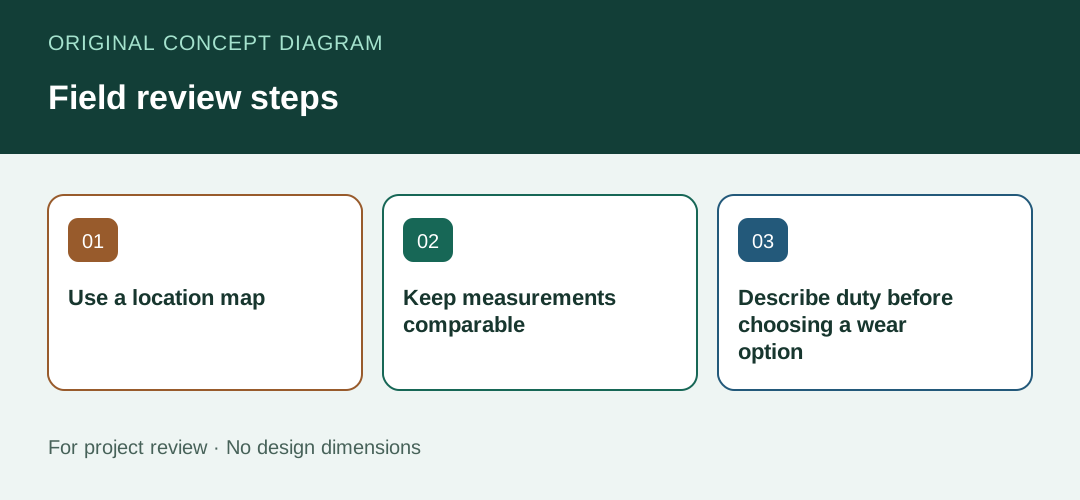
Use a location map
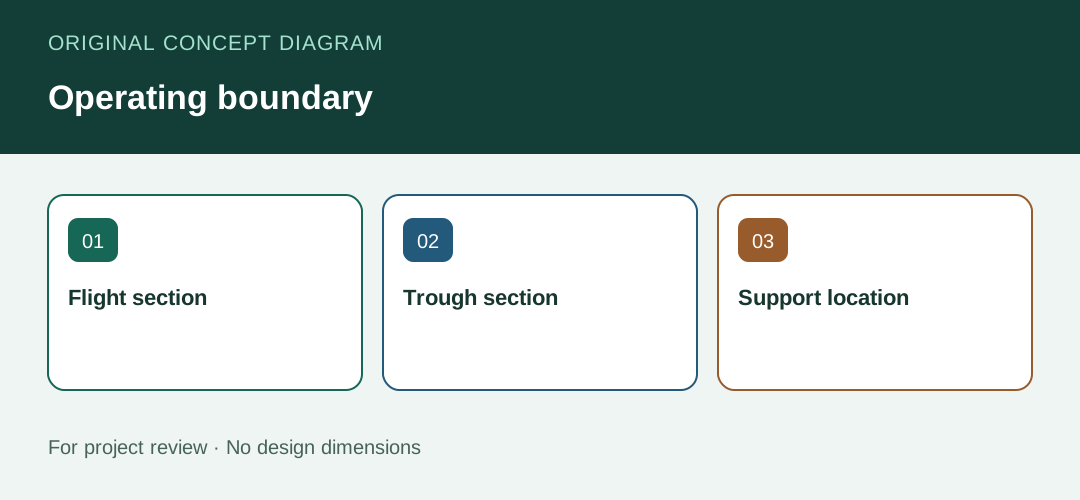
Start with the conveyor drawing and identify flight sections, trough sections and supports. Record the inspection date and material service. KWS relates abrasiveness and flowability to conveyor selection and wear considerations [2]. The same material name can be accompanied by different moisture, lumps and operating histories.
Keep measurements comparable
Use the approved inspection method at repeatable locations. Separate observations of polishing, material loss and deformation. When numerical thickness is available, retain the measurement reference and instrument rather than recording only a relative rating. Keep repaired sections visible in the history.

Describe duty before choosing a wear option
Send the supplier the wear map and available feed rate, bulk density, operating hours and material observations. Ask for the basis of proposed geometry, material or maintenance changes. Tie follow-up inspection to documented service conditions. The source site's general performance review [1] provides context for keeping maintenance evidence alongside operation data.
FAQ. Can wear be compared by calendar time alone?
Compare exposure and operating history as well as elapsed time. Different throughput and material conditions change the comparison.
Technical sources and editorial note
References are identified in the text. Checklists and diagrams support project review.
Related equipment: Pulse jet baghouse dust collectors · Dust collector filter bags
Use this guide to prepare for an equipment discussion. Confirm selection and operating requirements against your actual process and site conditions.