
Published · Kuohai Editorial
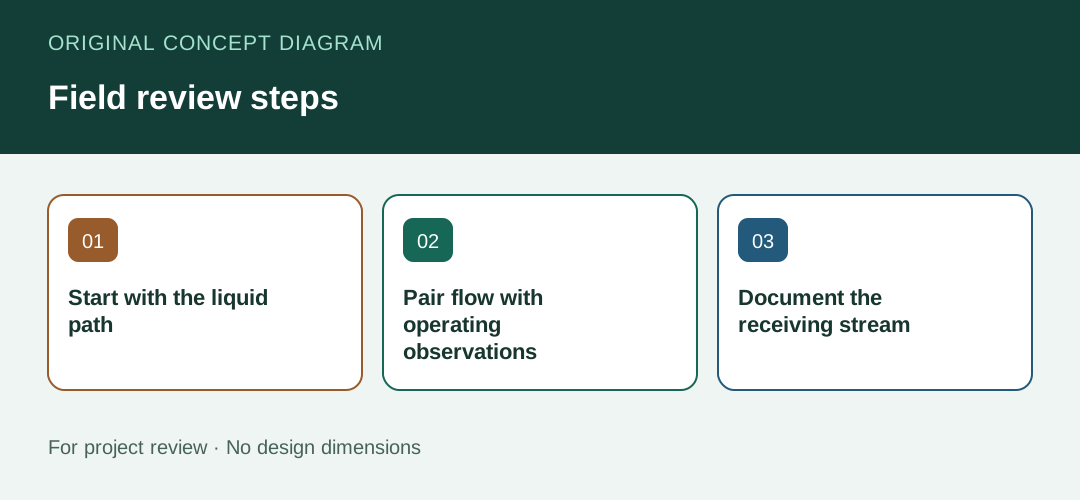
Start with the liquid path
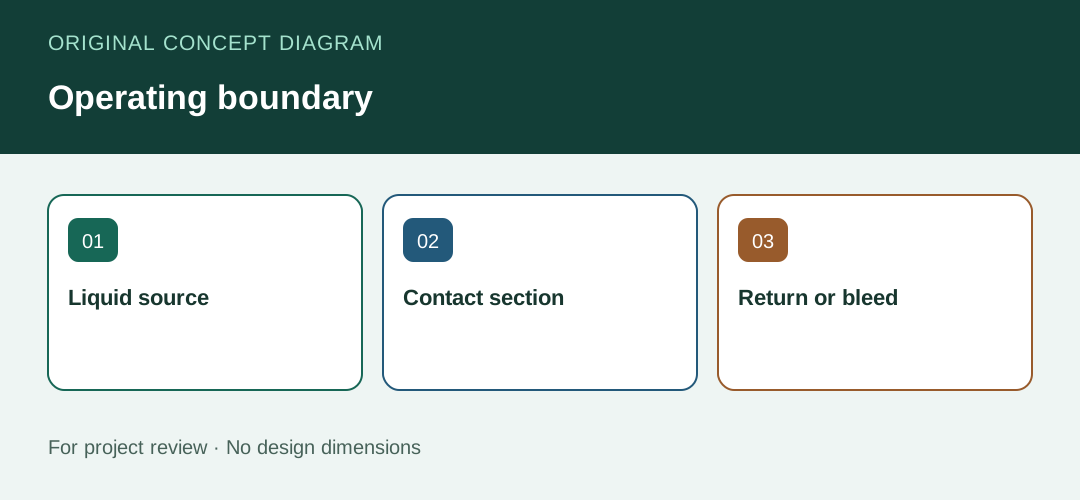
Wet particulate scrubbers transfer particles from the gas into a liquid [2]. Use the site's process diagram to identify the liquid source, pump, contacting section, return and any purge or makeup stream. A tank level reading alone tells little about the amount of liquid reaching the contact section.
Pair flow with operating observations
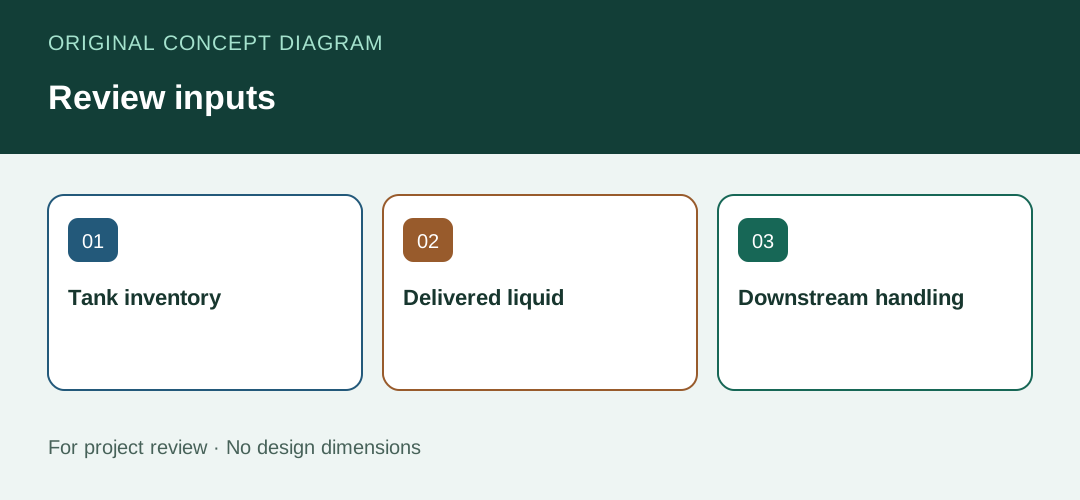
Record the approved flow measurement point, instrument units, pump state and relevant valve positions. EPA identifies inadequate liquid flow and plugged nozzles as operating problems [2]. If the reading changes after a maintenance event, preserve the before-and-after setup and ask which section should be checked first.
Document the receiving stream
Separate the circulation loop from the facility's liquid and solids treatment responsibility. Define where bleed or spent liquid is measured and who accepts it downstream. This applies the source site's performance-review approach [1] to the actual liquid circuit. Ask for approved operating limits and treatment requirements for the installed process.
FAQ. Can adding makeup water resolve low supply flow?
The cause must be identified from the liquid path and measurements. Check makeup and delivered flow as separate quantities.
Technical sources and editorial note
References are identified in the text. Checklists and diagrams support project review.
- [1] Kuohai archive · Dust collection performance review
- [2] US EPA · Wet scrubber for particulate matter
Related equipment: Pulse jet baghouse dust collectors · Dust collector filter bags
Use this guide to prepare for an equipment discussion. Confirm selection and operating requirements against your actual process and site conditions.