
Published · Kuohai Editorial
Give the supplier more than average particle size
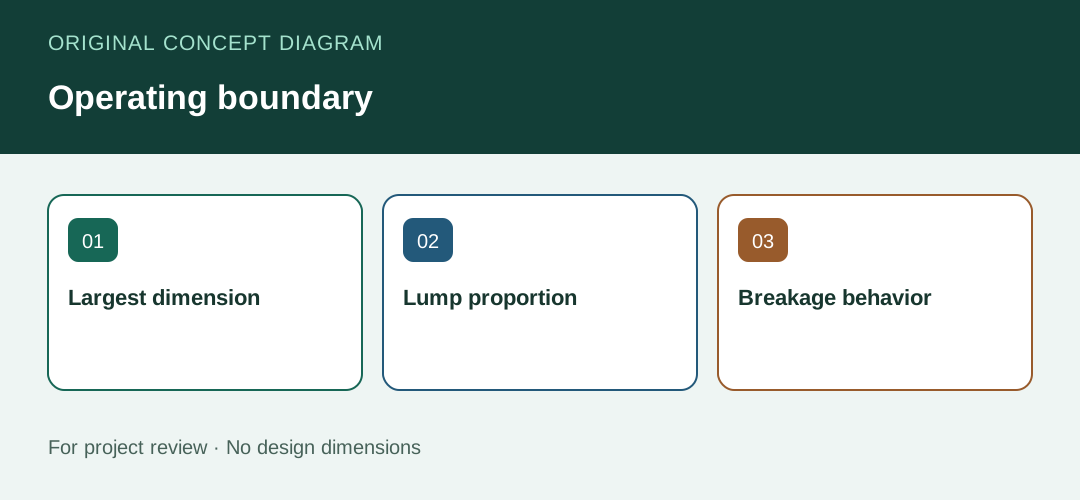
The larger pieces in an ash stream can affect passage through a screw conveyor. KWS identifies maximum lump dimensions, their proportion and resistance to breakage as selection inputs [2]. Describe the length of elongated pieces and record the sampling conditions. Retain examples of material from abnormal as well as ordinary production when available.
Review the narrowest relevant passage
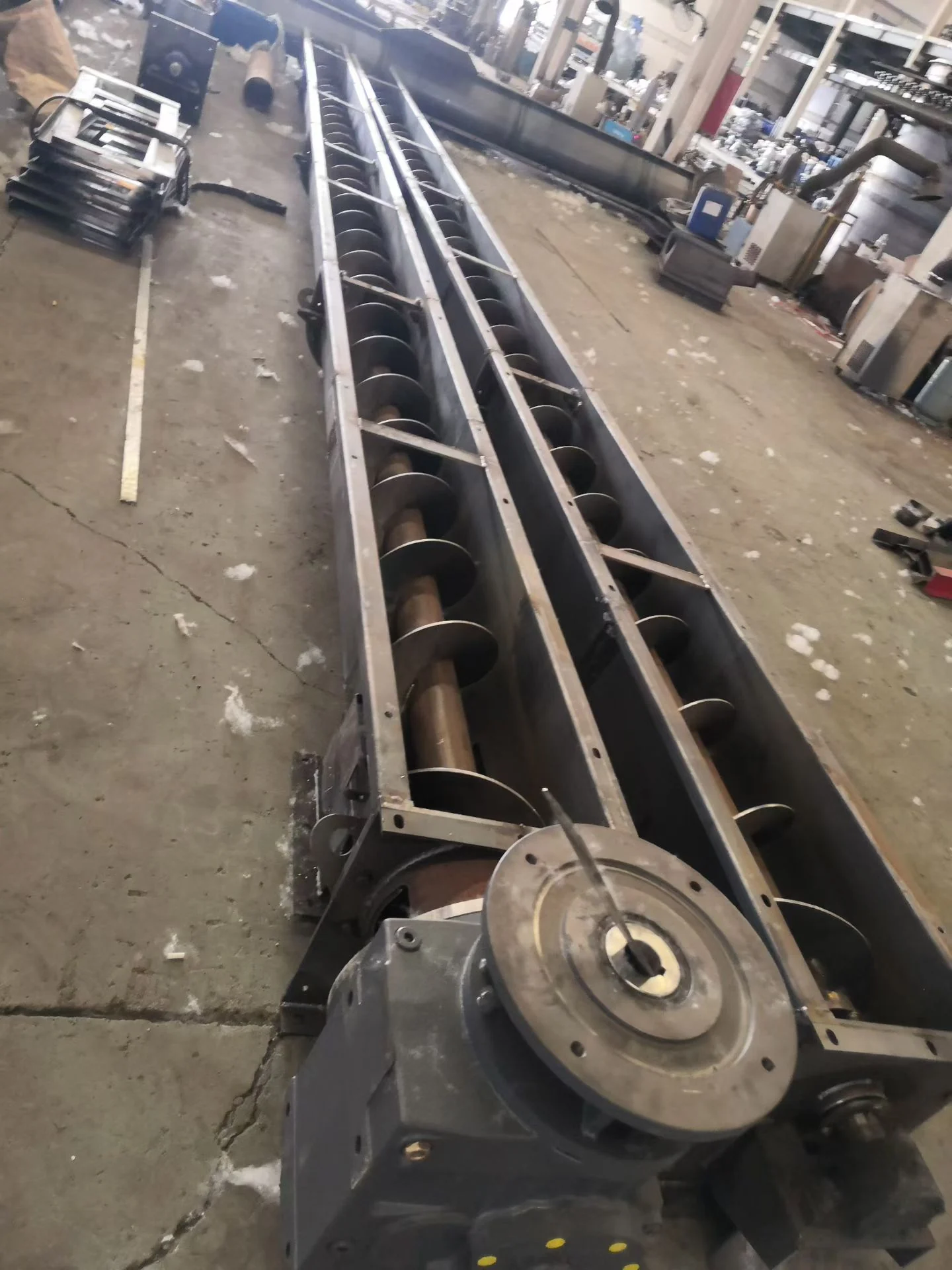
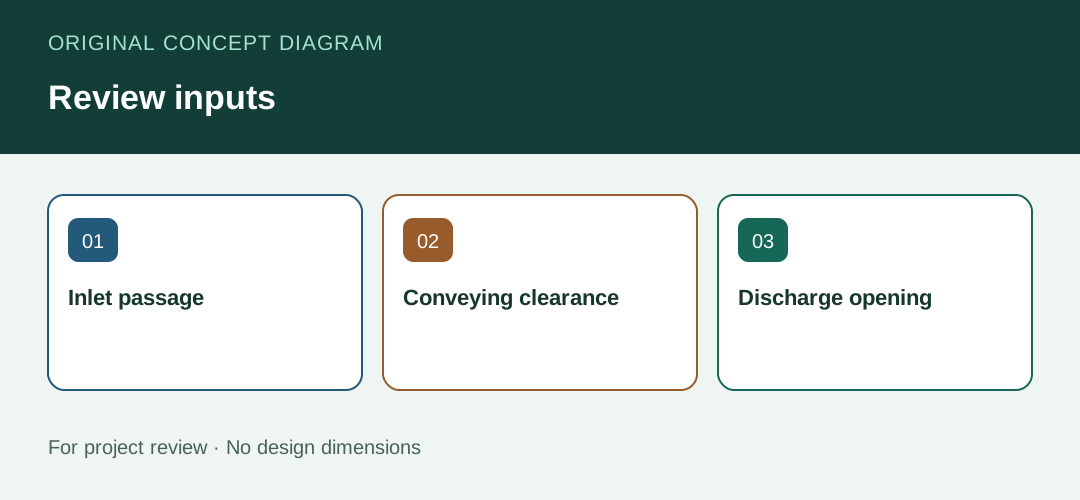
Ask the supplier to identify where the largest pieces must pass, including inlet, spiral, supports and outlet as applicable. Share the installed layout if this is a retrofit. Keep clearance values tied to the offered geometry. A housing diameter alone does not describe the available passage through the assembly.
Write the acceptance case
Record the expected solids rate and which representative material the parties will use for acceptance. Specify how exceptional clumps will be handled under the site's approved process. Retain the materials record beside the dust collection performance review [1] so the discharge side receives its own acceptance evidence.
FAQ. Is a sample of loose fines sufficient?
Include coarse or hard pieces when they are expected in service. State whether the sample represents normal or abnormal feed.
Technical sources and editorial note
References are identified in the text. Checklists and diagrams support project review.
Related equipment: Pulse jet baghouse dust collectors · Dust collector filter bags
Use this guide to prepare for an equipment discussion. Confirm selection and operating requirements against your actual process and site conditions.