
Published · Kuohai Editorial
Why check alignment and tension separately?
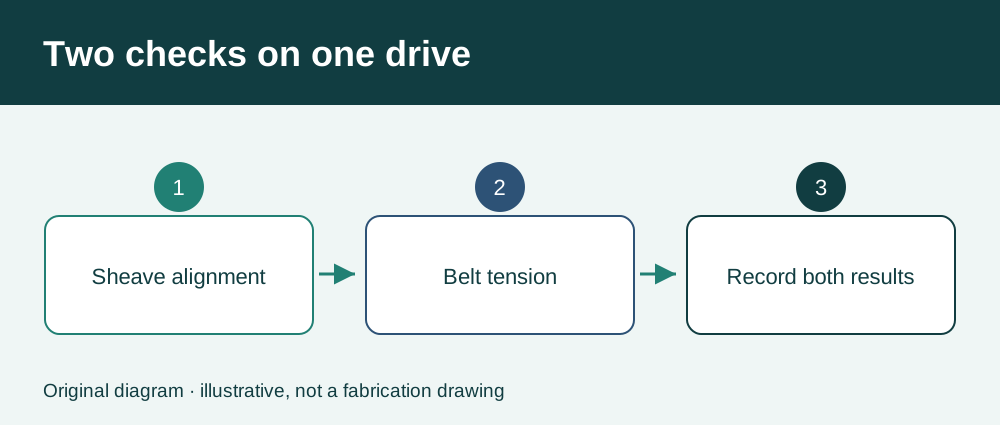
Alignment determines how the belt enters and leaves each sheave. Tension affects how the drive transfers load. A belt can be correctly tensioned and still wear unevenly if the sheaves are out of alignment. Increasing tension to compensate can increase loads on the shafts and bearings.
What belongs on the maintenance record?
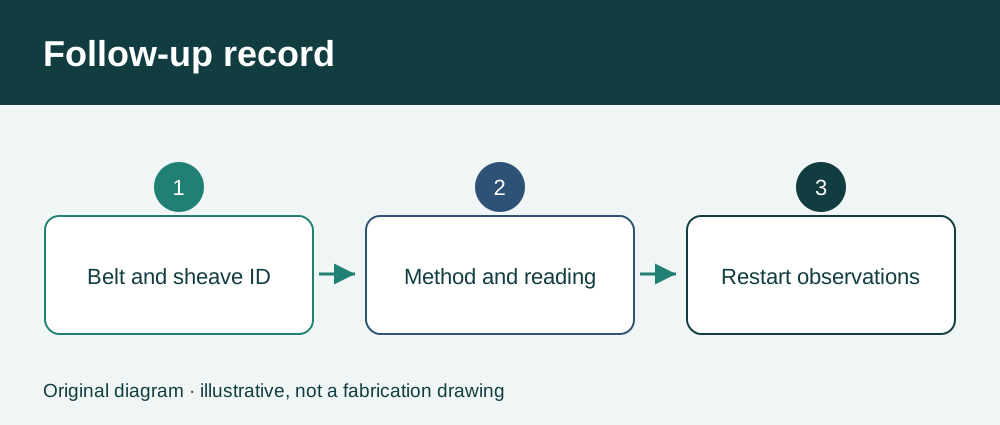
With the equipment isolated, identify the belt profile and sheaves, then check groove condition and alignment by the approved method. Record the specified tension, the measuring method and the reading. When a drive uses multiple belts, follow the supplier’s requirements for replacing and matching the set.
What should the restart confirm?
Reinstall the guards before returning the fan to service. Record speed, noise and vibration under a known operating condition. Schedule any follow-up tension check specified for the installed belt. If slipping or uneven wear returns, review alignment, groove condition and actual load with the maintenance team.
FAQ: Can we use the same tension on every fan?
No. Use the requirement for the installed drive, belt type and measurement method. Different drives may need different values.
Technical sources and editorial note
Use the installed drive manufacturer’s tension values, measurement procedure and service interval.
Related equipment: Pulse jet baghouse dust collectors · Dust collector filter bags
Use this guide to prepare for an equipment discussion. Confirm selection and operating requirements against your actual process and site conditions.