
Published · Kuohai Editorial
Read the full test condition
Air permeability describes airflow through a sample under a stated pressure difference. Check the unit, reference area and test pressure before comparing data sheets. A value expressed in cubic feet per minute per square foot can be converted to an equivalent face velocity, but a unit conversion cannot correct for a different test pressure.
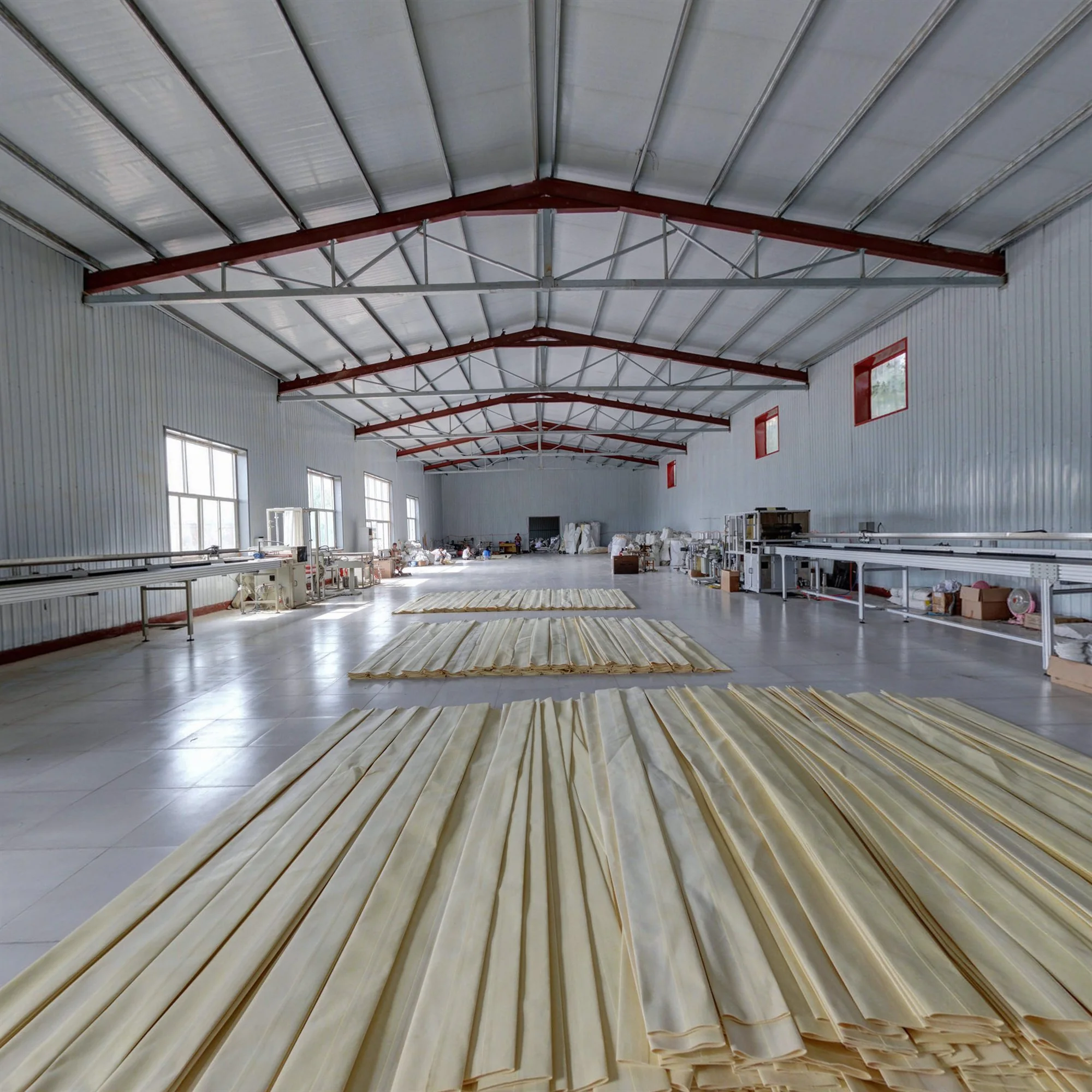
Check which material was tested
Ask whether the specimen was the finished felt or an untreated substrate. Record surface finish, membrane and sample conditioning along with the reported range. If a supplier offers an alternate construction, request results on the same basis before comparing it with the approved material.
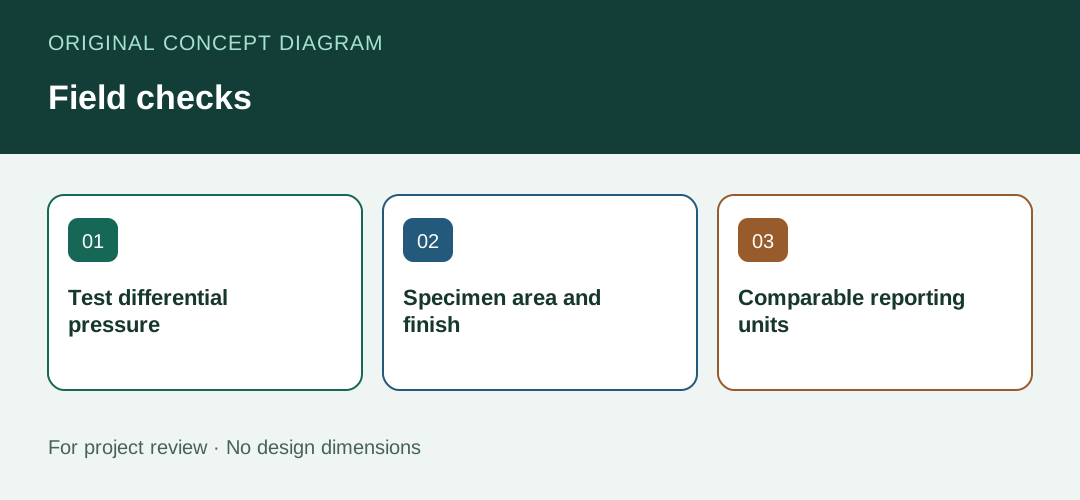
Keep system performance separate
A clean media test excludes the developing dust cake and flow losses elsewhere in the collector. Use the permeability range for material comparison or agreed incoming checks. Evaluate running pressure drop with process flow, dust loading and cleaning behavior documented.
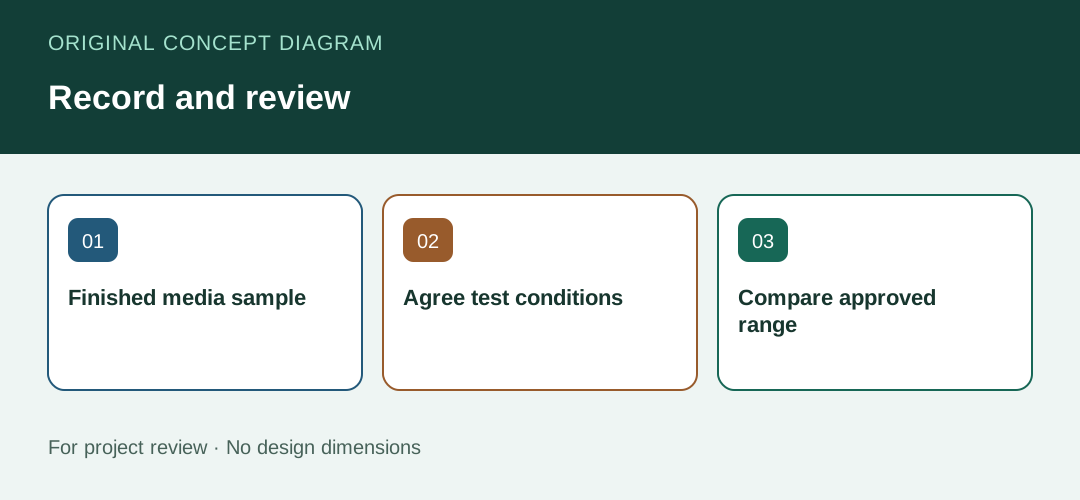
FAQ: Is a higher permeability always better?
Choose a range that fits the specified media construction and filtration duty. A higher clean-sample value by itself gives no reliable prediction of emissions or service life.
Technical sources and editorial note
Diagrams illustrate review steps. Archive photos show the identified components or equipment exterior.
- Micronics · Filtration and Air Permeability
- Kuohai archive · Selecting a collector for the operating conditions
Related equipment: Pulse jet baghouse dust collectors · Dust collector filter bags
Use this guide to prepare for an equipment discussion. Confirm selection and operating requirements against your actual process and site conditions.