
Published · Kuohai Editorial
Save a baseline with operating context
EPA’s bag leak detection guidance distinguishes background signal from short cleaning peaks. Record the normal production mode, detector range and signal processing at commissioning. Include several cleaning cycles so a later comparison has both a background level and representative peak shapes.
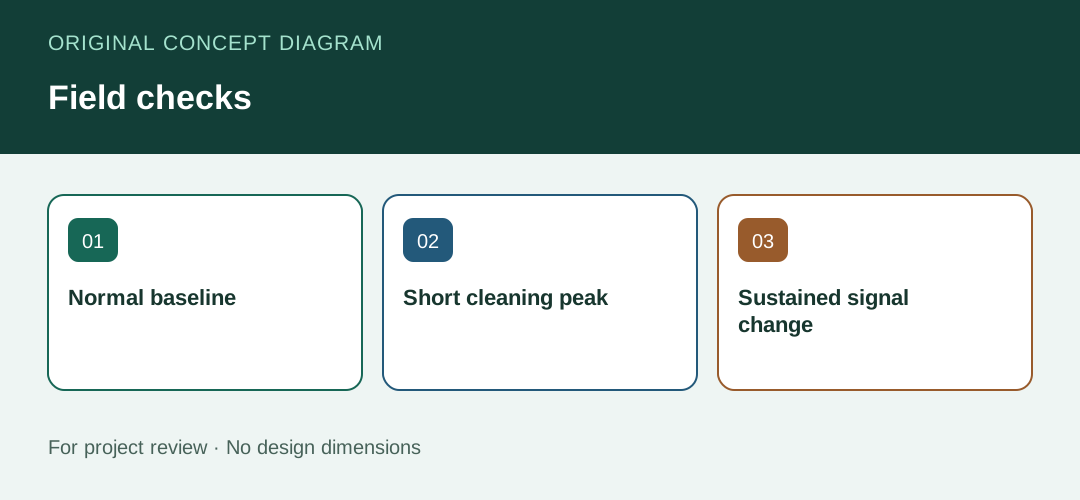
Compare the event against two time series
Overlay detector output and the cleaning sequence on one time axis. Check whether an elevated signal repeatedly follows a cleaning event or remains elevated between events. A repeated pattern helps prioritize inspection, but confirm time offsets and possible transport delay before assigning a location.
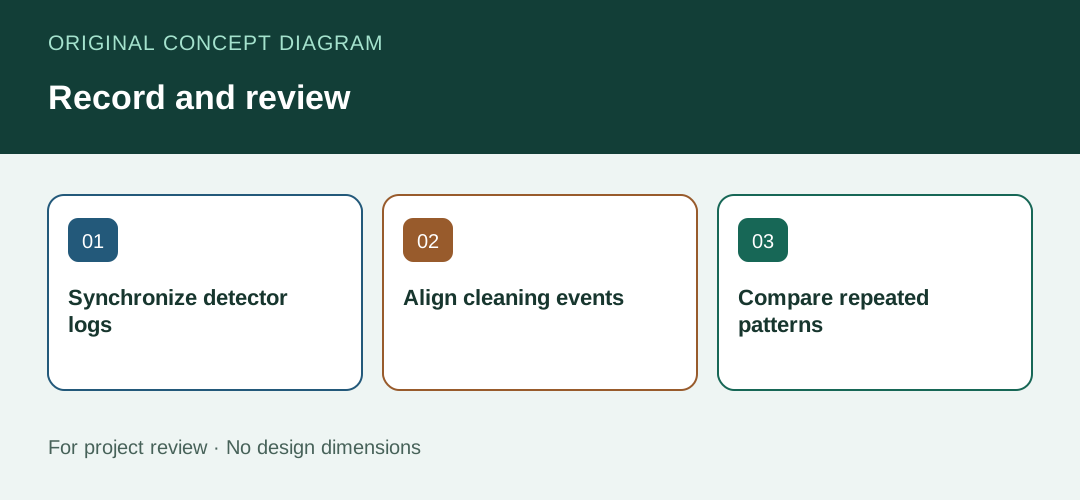
Keep settings and corrective actions together
Record range, filtering, alarm delay, probe maintenance and operator response in one change history. A shift after a settings change or probe service needs context before it can be compared with the old trace. Use the applicable monitoring plan and instrument instructions for alarm decisions.

FAQ: Can I convert the detector percentage to mg/m³?
A relative detector output has no universal conversion to concentration. Quantitative reporting requires a measurement or site-specific correlation approved for that purpose.
Technical sources and editorial note
Diagrams illustrate review steps. Archive photos show the identified components or equipment exterior.
- US EPA · Fabric Filter Bag Leak Detection Guidance
- Kuohai archive · Dust collector performance review
Related equipment: Pulse jet baghouse dust collectors · Dust collector filter bags
Use this guide to prepare for an equipment discussion. Confirm selection and operating requirements against your actual process and site conditions.