
Published · Kuohai Editorial
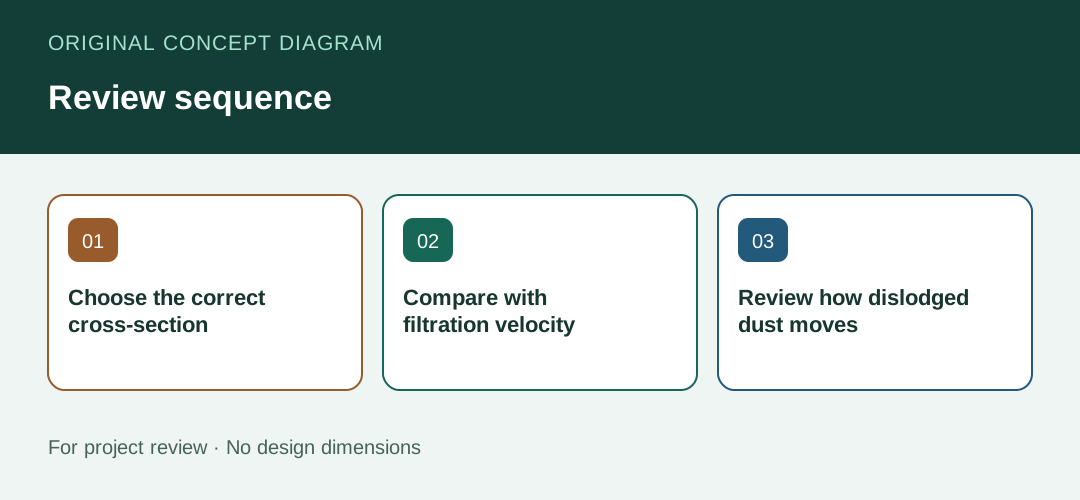
Choose the correct cross-section
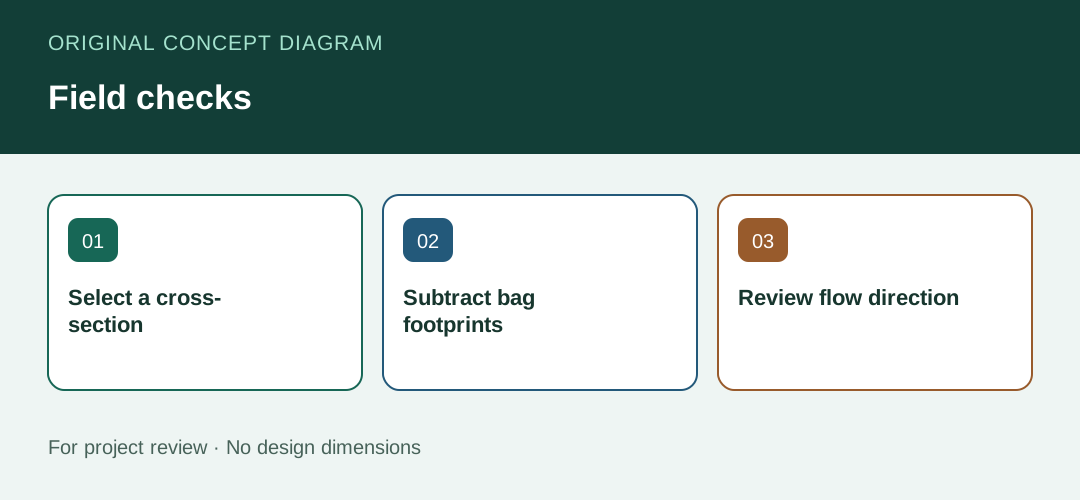
Interstitial velocity describes the air speed through the gaps between filter elements at a defined plane. In a simple upward-flow estimate, divide the actual flow crossing that plane by its open area. Document which flow and which bag cross-sections the calculation uses, including any other obstructions.
Compare with filtration velocity
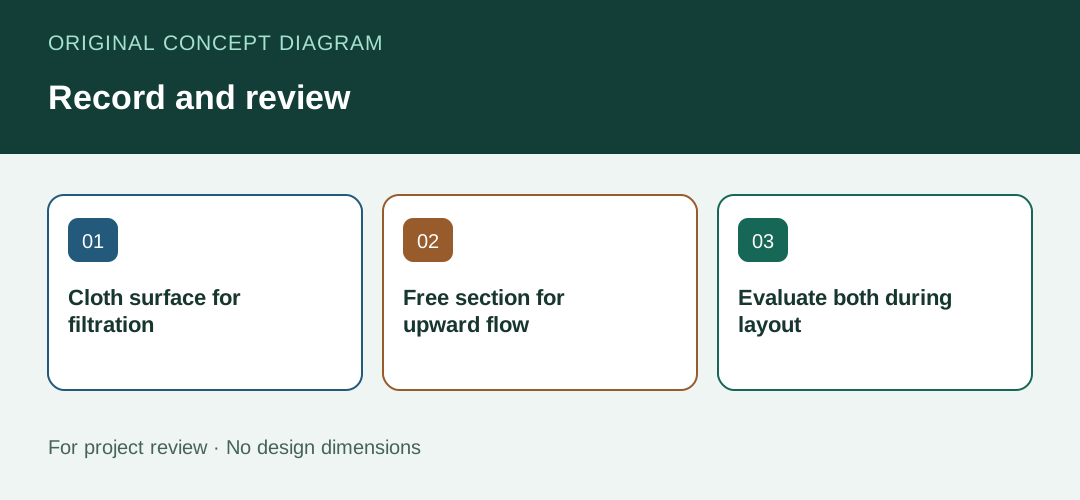
Filtration velocity uses the cloth surface area. Interstitial velocity uses the open section in the direction of flow. Adding bags can increase cloth area while reducing open area at the same plane. Assess both figures when reviewing a tighter layout.
Review how dislodged dust moves
On an upward-flow design, released particles may be carried back toward the bags. Ask for the inlet arrangement, direction of flow and open area under each operating case. Check whether the geometry helps released dust reach the hopper, particularly where flow turns or passes through a restricted region.
FAQ: Can I specify one maximum for every dust?
Use the supplier’s design basis for the particular dust and flow path. Particle behavior and local flow distribution affect how useful a section-average value is.
Technical sources and editorial note
Diagrams illustrate review steps. Archive photos show the identified components or equipment exterior.
Related equipment: Pulse jet baghouse dust collectors · Dust collector filter bags
Use this guide to prepare for an equipment discussion. Confirm selection and operating requirements against your actual process and site conditions.