
Published · Kuohai Editorial
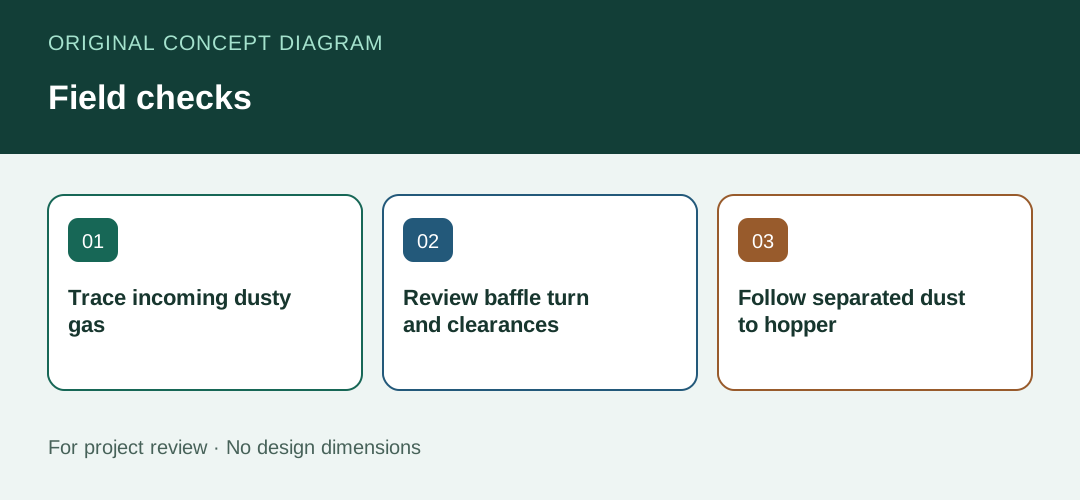
Trace the gas and dust separately
Mark the inlet, bag field and hopper on a section drawing. Donaldson’s RF manual describes a high inlet with baffles that turn the incoming flow and reduce direct impingement on the bags. Identify where the design expects separated particles and dust released by cleaning to travel.
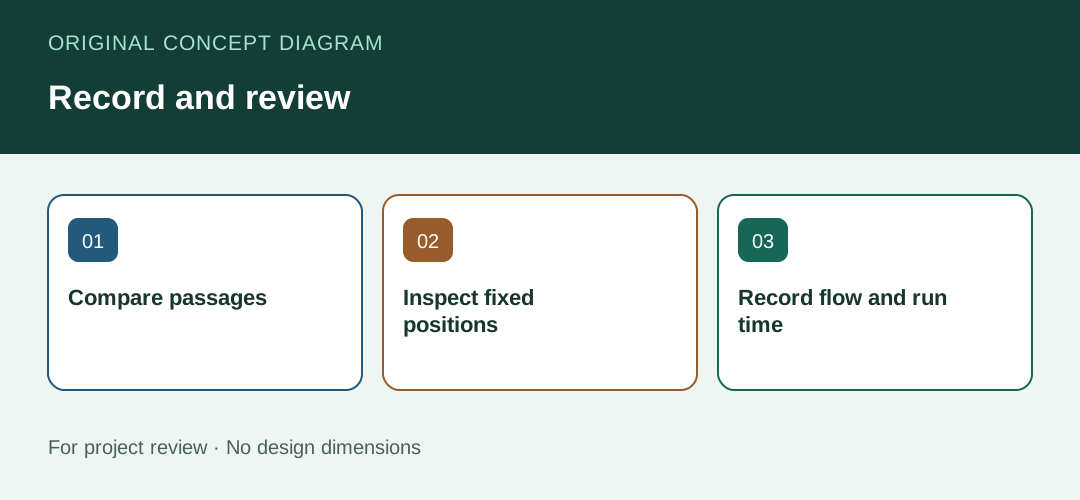
Ask what the proposed geometry changes
Compare old and new open passages, edges and access clearances. A baffle relocation can shift the zone of direct exposure or introduce a restriction. Ask for the design basis at minimum and maximum flow and for the route by which material behind or below the baffle can reach the hopper.
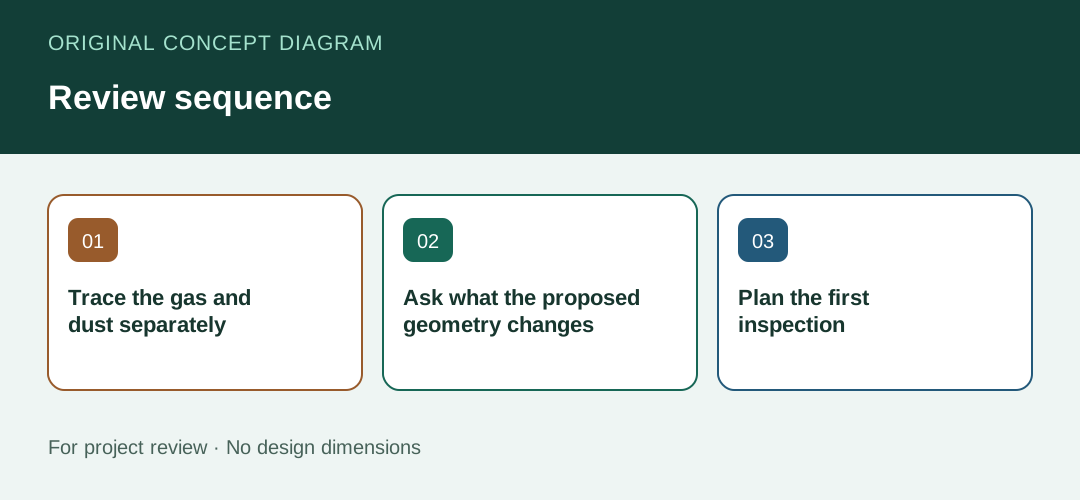
Plan the first inspection
Use fixed observation positions to document dust accumulation and signs of wear after the unit has operated under recorded conditions. Pair the observations with actual flow and operating time. A pattern concentrated on one side helps decide where to investigate flow distribution next.
FAQ: Can I copy a high-inlet baffle into a hopper inlet?
Review the actual gas path and housing geometry before transferring a design. Inlet location, approach direction and clear passages determine where the turning arrangement can work.
Technical sources and editorial note
Diagrams illustrate review steps. Archive photos show the identified components or equipment exterior.
Related equipment: Pulse jet baghouse dust collectors · Dust collector filter bags
Use this guide to prepare for an equipment discussion. Confirm selection and operating requirements against your actual process and site conditions.