
Published · Kuohai Editorial
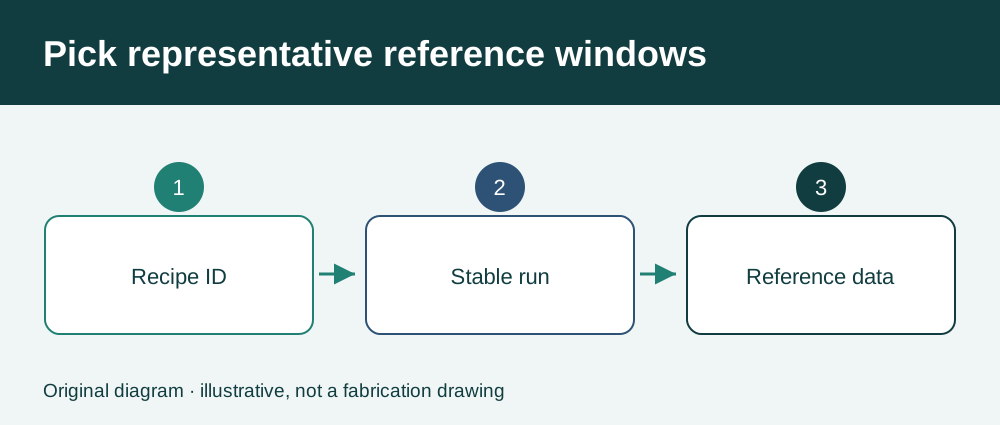
Pick representative reference windows
Capture stable runs for the main recipe groups. Record airflow or other available load indicators, inlet temperature, cleaning status and pressure drop. Flag startups and changeovers separately so the comparisons have a defined basis.
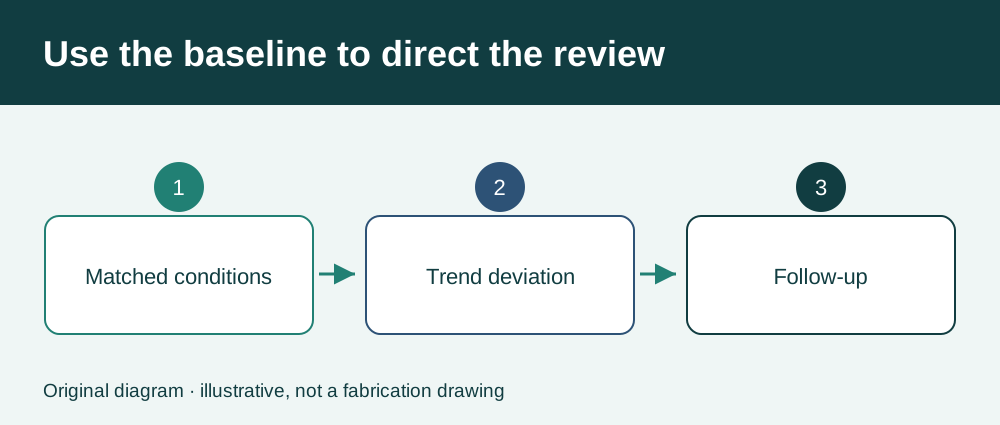
Use the baseline to direct the review
If two repeat runs on the same recipe drift apart, examine changes in process load, dust behavior or equipment operation. The reference trend helps ask better questions; it does not establish an emission limit or replace the required monitoring method.
FAQ: Does every recipe need its own baseline?
Recipes may share a baseline when comparable operation is documented. Keep separate records where operating differences materially affect the readings.
Technical sources and editorial note
Technical concepts are independently summarized from the sources below; the quotation checklist is editorial guidance. The EPA manual is a historical engineering reference, not a current price guide or a statement of local compliance. Images are equipment references from the existing Kuohai website library, not evidence of a particular performance result. Sources reviewed on 2026-11-16.
Related equipment: Pulse jet baghouse dust collectors · Dust collector filter bags
Use this guide to prepare for an equipment discussion. Confirm selection and operating requirements against your actual process and site conditions.