
Published · Kuohai Editorial
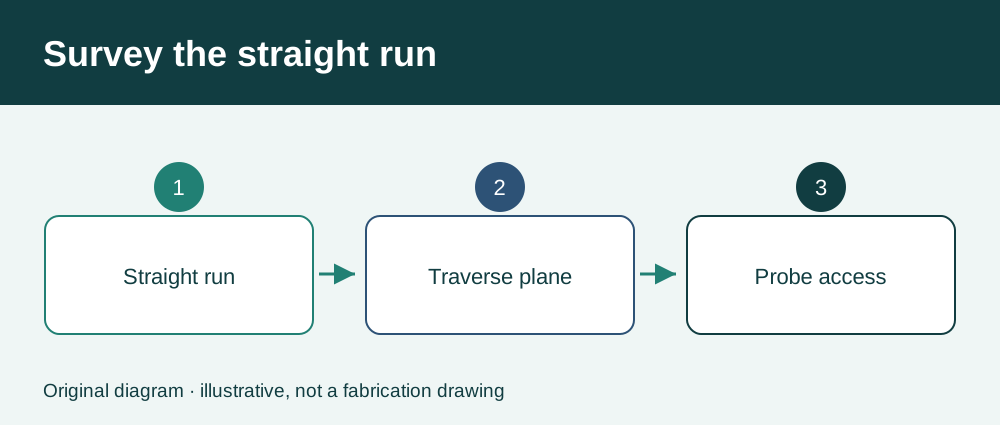
Survey the straight run
Mark upstream elbows and branches and downstream transitions on the layout. Give the test team the actual inside duct dimensions and room to insert the probe. Have them confirm the location against the agreed method.
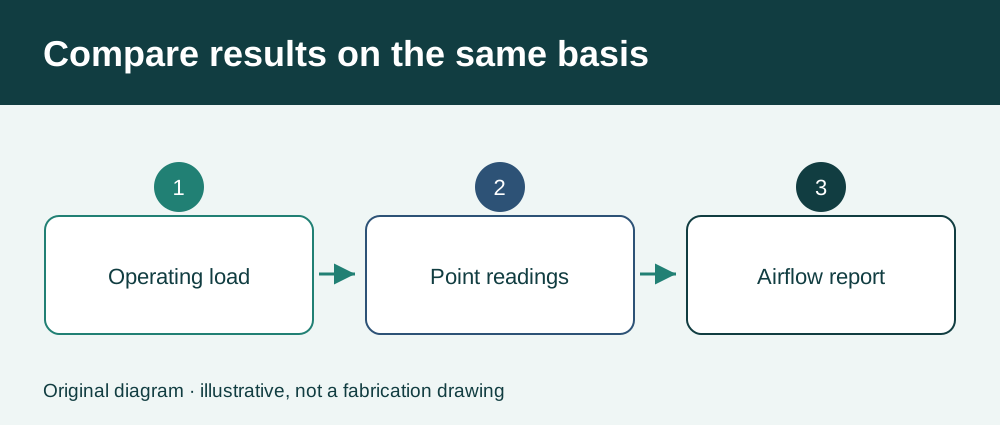
Compare results on the same basis
Record process loads, active branches and gas conditions with the traverse. A point at the centerline is not a cross-section average. If access is limited, record the limitation and agree on an alternative before treating the result as acceptance evidence.
FAQ: Can a single reading prove total airflow?
Usually not. Velocity varies across the duct; use the agreed traverse and record the measurement area and operating conditions.
Technical sources and editorial note
Technical concepts are independently summarized from the sources below; the quotation checklist is editorial guidance. The EPA manual is a historical engineering reference, not a current price guide or a statement of local compliance. Images are equipment references from the existing Kuohai website library, not evidence of a particular performance result. Sources reviewed on 2026-11-16.
Related equipment: Pulse jet baghouse dust collectors · Dust collector filter bags
Use this guide to prepare for an equipment discussion. Confirm selection and operating requirements against your actual process and site conditions.